

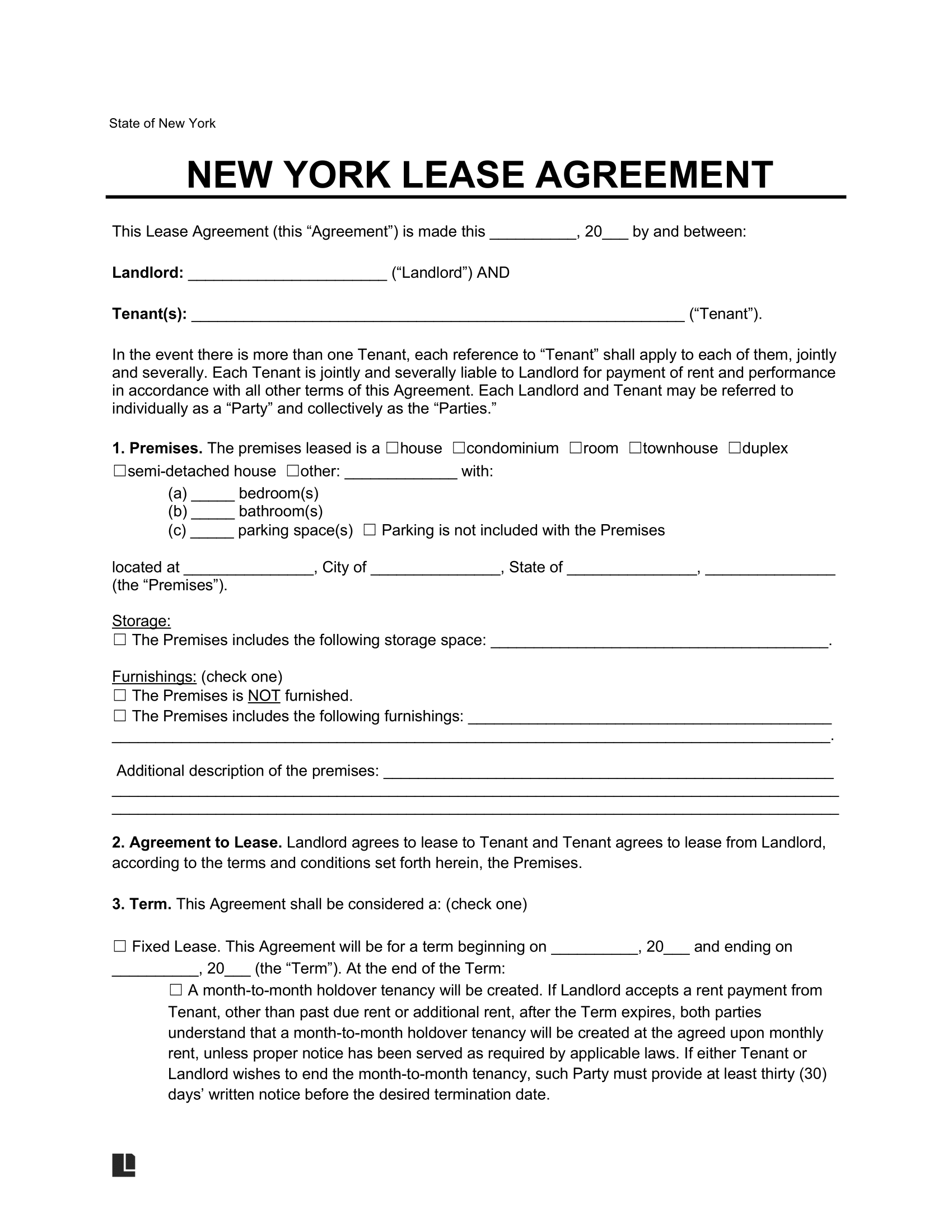
Navigating the New York City real-estate world can appear like learning a fresh language, and at the heart of this language could be the residential lease agreement new york.Whether you're a veteran New Yorker or a newcomer to the town, understanding the complexities of one's lease is imperative to protecting your rights as a tenant and maintaining an optimistic landlord-tenant relationship.
Residential leases in New York can be dense with serviceable language, but there are numerous essential terms and clauses that every tenant must be familiar with before they sign on the dotted line. From rent stabilization to the right of succession, not knowing the significance of the words can have far-reaching consequences.
Rent Stabilization vs. Rent Control
In the Big Apple, most tenants are covered by either rent stabilization or rent control. These regulations are designed to protect tenants from unconscionable rent increases and provide a degree of long-term stability in housing costs.
Rent Stabilization applies to buildings with six or more units built before 1974 or after 1974 when they received certain tax benefits. Rent increases for tenants under this regulation are determined annually by the Rent Guidelines Board, and tenants have the proper to renew their lease each year. The board sets parameters for simply how much rent may be raised, usually between one and four percent.
On the other hand, Rent Control applies to buildings which were constructed before February 1947 and where tenants or their successors have remained in continuous occupancy. Under rent control, tenants' rents can only be raised with the permission of the New York State Division of Housing and Community Renewal.
Familiarizing yourself with whether your unit falls under rent stabilization or rent control not only affects your rent but also impacts other regulations that will affect your lease, such as limits on security deposits and eviction proceedings.
Essential Terms to Look For
A lease is a binding legal contract, meaning the details matter. Here are some critical elements you ought to look closely at:
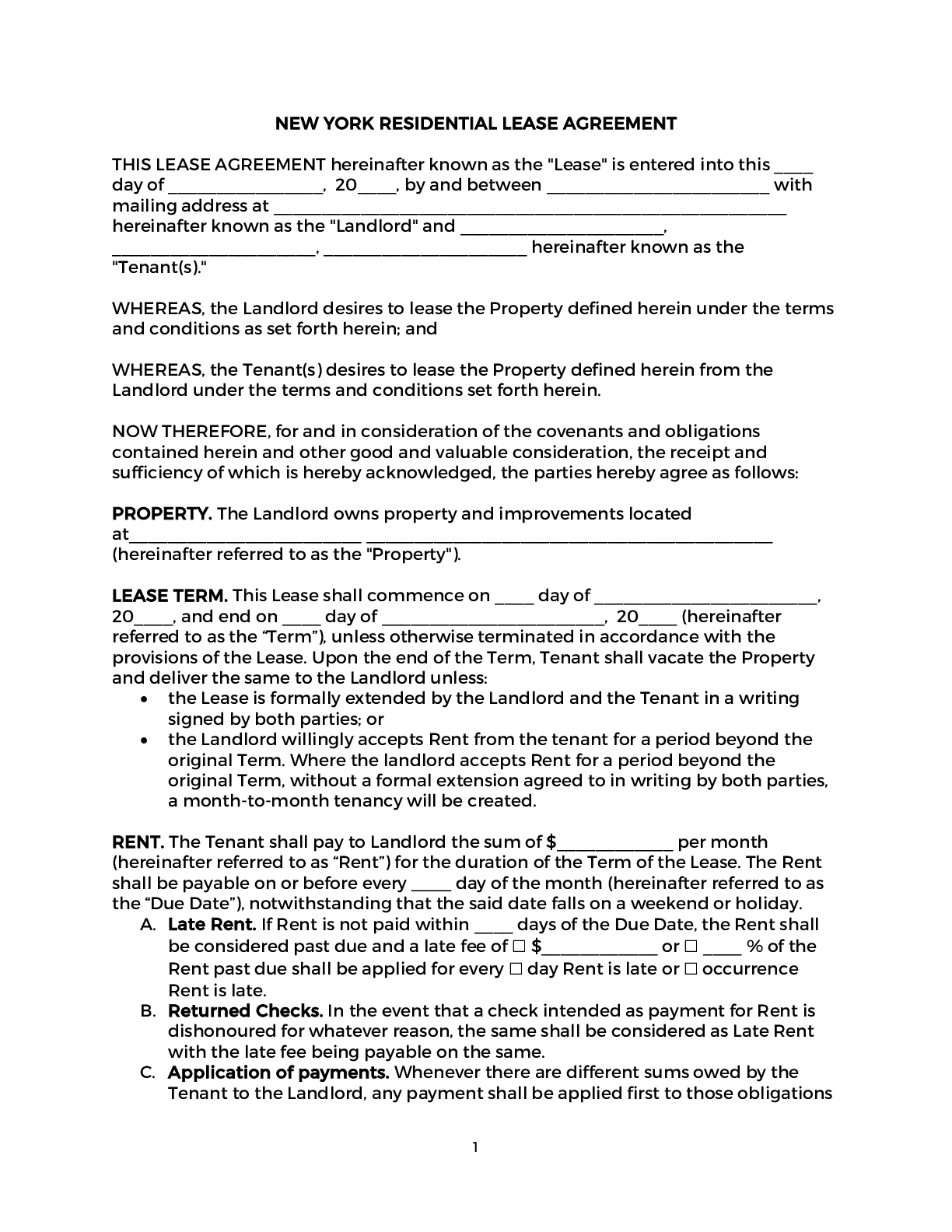
Term of the Lease: This is actually the duration of the lease, typically twelve months for residential leases. It's important to understand when the lease starts and ends, as well as the automatic renewal stipulations.
Rent and Late Fees: The lease should outline the monthly rent amount and the date where it is due. It will also detail any extra fees, especially late fees, that could be incurred and the grace period for late payments.
Utilities and Services: Understanding which utilities or services are contained in your rent and which are your responsibility can prevent misunderstandings down the line. This section should also cover who is responsible for utility repairs and any related costs.
Security Deposit: The lease should specify the total amount of the security deposit, the conditions under which it will soon be returned, and any interest that will accrue on the deposit.
Maintenance and Repairs: This section outlines the landlord's obligations for maintaining the property in livable condition, and the tenant's responsibilities for routine maintenance.
Critical Clauses in a New York Lease
The Right to Sublease: This clause specifies whether the tenant is permitted to sublease the property to a different person, and under what conditions.
Right of Succession: In New York City, certain family unit members have the best to take over a rent-stabilized or rent-controlled apartment following the tenant moves out or dies.
Quiet Enjoyment: This clause guarantees the tenant's directly to peacefully and undisturbedly enjoy their rented premises throughout the lease term.
Entry by Landlord: The lease should detail when, how, and under what conditions the landlord or their agent can enter the property.
Understanding these and other critical terms in your lease agreement may be the first faltering step in being the best and protected tenant in New York City. Remember, a lease is really a two-way street — both the tenant's and the landlord's rights and obligations should be clearly stated and understood. As the contract might initially feel daunting, it's the main element to ensuring a harmonious and sustainable landlord-tenant relationship in one of the world's most dynamic cities.